Understanding the Sea Urchin Die-Off Crisis
The ocean’s health is a critical component of our planet’s overall ecosystem. Among the many species that play essential roles in maintaining this balance are sea urchins. However, these vital marine creatures are facing an alarming crisis. The recent wave of mass die-offs of sea urchins, especially in regions like the Canary Islands, has scientists and environmentalists deeply concerned. This phenomenon is being referred to as a ‘silent ocean pandemic,’ a testament to its widespread impact and mysterious origins.
The Current Crisis
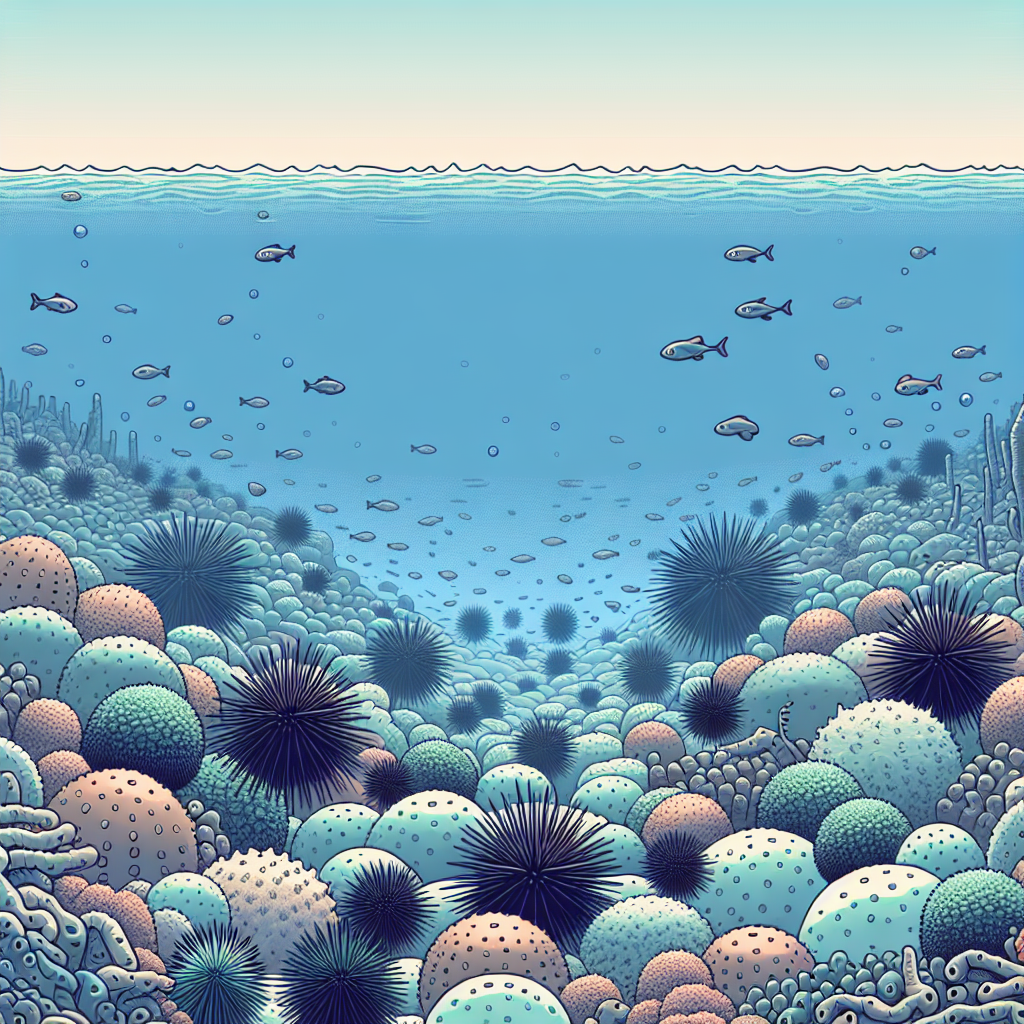
Sea urchins, particularly the Diadema africanum, are experiencing unprecedented mortality rates. This species is a key herbivore that helps maintain the balance in rocky reef ecosystems by grazing on algae that, if left unchecked, can overrun coral reefs. The loss of sea urchins, therefore, poses a significant threat to these ecosystems.
The crisis is particularly pronounced in the Canary Islands, where new studies have documented severe population collapses. For instance, in regions like La Palma and Tenerife, sea urchin densities have drastically decreased—by 73.8% and 99.66%, respectively, compared to pre-2021 levels [Science Daily].
Understanding the Pathogen
Despite extensive research, the exact cause of this mass die-off remains elusive. Scientists speculate that a pathogen is likely responsible, causing what is being described as an ‘ocean pandemic.’ Reports suggest that the pathogen might be a type of bacteria that spreads easily in marine environments, leading to widespread mortality among key species like the Diadema setosum and Diadema africanum. These findings are supported by new research which shows that a significant mortality event between 2022 and 2023 was driven by factors that are still under investigation [Frontiers in Marine Science].
Global Implications
This phenomenon is not isolated to the Canary Islands. Similar die-offs have been reported in the Red Sea and other global regions, highlighting the potential for a pandemic status [Frontiers]. If the pathogen is not contained, the ecological balance of oceans worldwide could be at risk, affecting biodiversity and the health of marine ecosystems.
Consequences for Coral Reefs
The significance of these die-offs extends beyond the biology of sea urchins. These creatures play a pivotal role in coral reef maintenance by controlling algae populations. Without them, algae can proliferate uncontrollably, suffocating coral reefs—a phenomenon that could lead to the degradation of reef health and the loss of biodiversity [Courthouse News].
Moving Forward
Efforts are underway to identify the exact cause of these mass die-offs and to determine effective countermeasures. Researchers are leveraging citizen science, visual censuses, and larval settlement surveys to document and understand the extent and impact of these mortality events [ScienceDirect]. These efforts are crucial for forming a strategic response to this unfolding ecological crisis.
The primary goal is to halt the spread of the pathogen and develop intervention strategies that could prevent further losses. This process involves identifying resistant urchin strains and testing methods to bolster their populations.
Conclusion
The sea urchin die-off crisis serves as a stark reminder of the delicacy of marine ecosystems and the far-reaching consequences of biodiversity loss. Urgent action and international cooperation will be required to address this silent pandemic and protect our ocean’s future.