
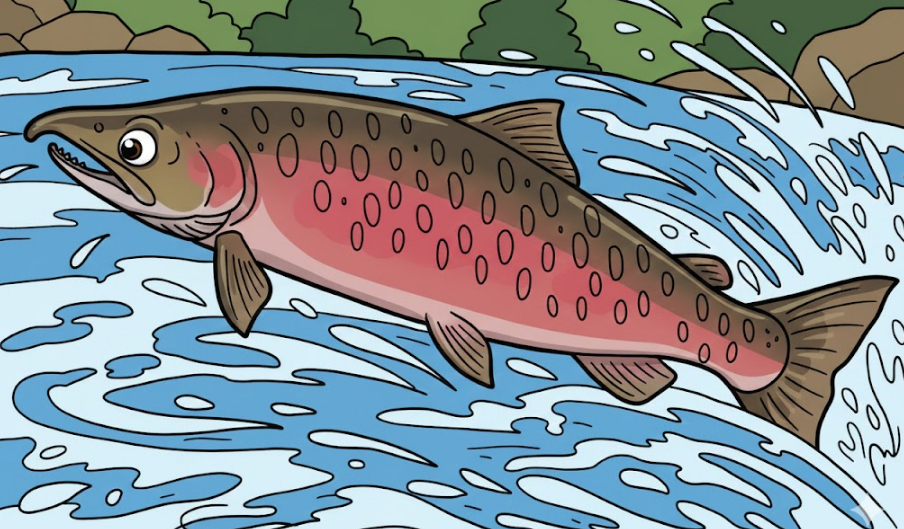
Salmon Poisoning Disease (SPD) in Dogs
Salmon poisoning disease (SPD) is a potentially fatal illness affecting dogs (and other canids) that consume certain raw fish. It is caused by Neorickettsia helminthoeca, a rickettsial bacterium carried by a parasitic fluke (Nanophyetus salmincola) found in salmon, trout, and related freshwater fish. The fluke itself causes little harm, but if it is infected with N. helminthoeca and a dog eats raw or undercooked fish (or even salamanders) containing these cysts, the bacteria are released in the dog’s gastrointestinal tract, leading to a systemic infection. Notably, the term “salmon poisoning” is a misnomer. No toxins are involved; the illness is an infectious bacterial disease transmitted by a fish-borne parasite.
Geographic Prevalence

SPD is almost exclusively found in the Pacific Northwest region of North America, where the parasite’s life cycle thrives in local waterways. Endemic areas include coastal and freshwater streams in Washington, Oregon, northern California, and southern Vancouver Island (Canada). The fluke and bacteria are indigenous to this region’s salmonid fish and snail populations, so cases outside the PNW are extremely rare. (One notable outbreak was reported in dogs in southern Brazil, marking the first occurrence outside North America.) Given this geographic limitation, veterinarians and pet owners in the PNW should be particularly vigilant. Dogs can be exposed not only at home but also during travel; owners visiting the PNW with their dogs are advised to be aware of SPD risk factors.
Clinical Symptoms and Disease Progression
Dogs that develop SPD typically develop gastrointestinal and systemic signs within about 5 to 7 days after eating infected raw fish. (In some cases, incubation can be longer – up to 2–4 weeks – but about one week is most common.) Early symptoms often include high fever, lack of appetite, and profound lethargy or depression.
Within a few days, vomiting (often starting by day 4–5 post-ingestion) and diarrhea ensue, which may become bloody as the illness progresses. Affected dogs rapidly dehydrate and lose weight due to severe diarrhea and anorexia. Another hallmark finding is enlarged lymph nodes (particularly those in the neck and elsewhere), due to the infection spreading through the lymphatic system. Many dogs also develop a high fever initially (104°F or higher), which may later drop to subnormal temperatures in advanced disease. Minor signs such as nasal or ocular discharge may occur, but the core signs are gastrointestinal distress, fever, weakness, and lymph node enlargement.
Without prompt treatment, SPD is usually fatal.
Approximately 90% of untreated dogs die, typically within 10–14 days of showing clinical signs. Death often results from dehydration, hemorrhagic diarrhea, and shock. The disease’s rapid progression means that what starts as mild lethargy can become a life-threatening crisis in just a matter of days. Early intervention is therefore critical. If diagnosed and treated in time, most dogs can survive. In fact, with appropriate therapy, the prognosis is excellent, and dogs often show improvement within 2–3 days of treatment.
Recent Case Examples (2023–2025)
Recent cases illustrate how swiftly SPD can strike and how crucial prompt treatment is. In March 2023, two puppies in Washington state (15-week-old Brick and 6-month-old Rogue) were brought to a Tacoma-area humane society in severe condition. They were vomiting, had diarrhea, were extremely weak and dehydrated, and tests confirmed an N. helminthoeca infection (salmon poisoning disease). Veterinarians noted that without treatment, SPD is about 90% fatal and can kill a dog within a week or so. Both pups received intensive care (including antibiotics, antiparasitic medication, IV fluids, and monitoring) and slowly began to recover.
In a more recent example from May 2025, a Portland, OR dog named Sister became critically ill after likely scavenging fish remains on a riverbank during a family outing. Within days, she developed bloody diarrhea, vomiting, and lethargy, and collapsed from SPD. Thanks to her owners’ quick action and emergency treatment (antibiotics, fluids, and supportive care), Sister survived and returned to normal within a week. These cases underscore that SPD remains a present-day threat in the PNW and highlight the importance of rapid veterinary intervention.
Diagnosis
Quickly diagnosing salmon poisoning disease (SPD) is vital to successful outcomes. Veterinarians will consider a dog’s history and region. For example, a dog with vomiting, diarrhea, and fever that has recently eaten raw fish or roamed near rivers in the PNW should immediately raise suspicion of SPD. A definitive diagnosis can often be made with simple diagnostic tests.
One common method is a fecal examination: the eggs of Nanophyetus salmincola (the fluke) can usually be detected in the dog’s stool by microscopy, confirming exposure to the parasite. However, if fecal tests are negative (eggs might not yet be shed early in infection), a lymph node aspirate can be performed. A sample taken from an enlarged lymph node and examined under a microscope may reveal characteristic intracellular bacterial clusters (morulae) of N. helminthoeca within the dog’s macrophages. This cytology test, along with the fecal exam, is a quick and affordable way to confirm SPD in a dog showing compatible signs.
Routine bloodwork is also helpful: SPD often causes low blood platelets (thrombocytopenia) and low albumin (protein) levels, reflecting the systemic infection and protein-losing diarrhea. Increasingly, specialized labs can run PCR tests to detect N. helminthoeca DNA, but in practice, the combination of history, clinical signs, fecal exam, and cytology usually provides a timely diagnosis.
Treatment
Treatment of salmon poisoning disease is straightforward and highly effective if started early. The cornerstone is antibiotic therapy to eliminate the rickettsial infection. Veterinarians typically prescribe tetracycline-class antibiotics such as doxycycline for 1–2 weeks. This targets Neorickettsia helminthoeca in the dog’s system. In tandem, an antiparasitic dewormer (most often praziquantel) is administered to kill the Nanophyetus flukes and halt further release of bacteria. Supportive care is also crucial: affected dogs usually require intravenous fluids to combat dehydration and antiemetics to control vomiting. If the dog is not eating, nutritional support may be provided, and gastroprotectants can be used to prevent stomach ulceration from vomiting.
In severe cases, hospitalization for several days is needed to provide round-the-clock care, IV fluids, and close monitoring. Most dogs show marked improvement within 24–72 hours after starting appropriate antibiotics and fluid therapy. The prognosis for recovery is excellent when treatment begins before the disease is advanced. Conversely, delayed or absent treatment often results in death, so early treatment can be lifesaving.
Prevention Guidance for Pet Owners
Preventing salmon poisoning disease is far better than treating it. Pet owners in endemic areas (or those visiting these regions) should take these precautions to keep dogs safe:
- Never allow dogs to eat raw or undercooked fish. Do not feed raw salmon, trout, or similar freshwater fish to dogs. If you choose to share fish with your pet, cook it thoroughly to destroy any parasites. Likewise, dogs should not be permitted to scavenge discarded fish entrails or carcasses from anglers.
- Supervise dogs around waterways in the PNW. When hiking, camping, or fishing with dogs in the Pacific Northwest, keep a close eye on them. Do not let them roam unsupervised near rivers, streams, or lake shores where they might find dead fish or aquatic wildlife. If fishermen are cleaning catches nearby, keep your dog away from those areas (as was learned in Sister’s case).
- Dispose of fish remains safely. If you fish or cook whole fish, ensure that all raw fish parts (guts, heads, etc.) are secured in a dog-proof container or disposed of in a way that dogs cannot access. This prevents curious pets from ingesting infectious material.
- Be aware when traveling. If you live outside the Pacific Northwest but visit with your dog, be aware that this disease is present in that region. Take the above precautions and educate anyone caring for your dog about the risks. Similarly, if your dog spends time with anyone who might feed them fish (family, pet sitters), make sure they know never to offer raw fish.
By following these preventive measures, pet owners can virtually eliminate the risk of SPD. Vigilance is key: because salmon poisoning disease is so localized, many dog owners (and even some veterinarians outside the region) may not be familiar with it. Spreading awareness, such as through cautionary tales about recent cases, helps ensure that dogs exposed receive prompt care. With prompt diagnosis and proper treatment, even a disease as serious as salmon poisoning can be cured, but avoiding exposure in the first place is the safest bet for your canine companion.