
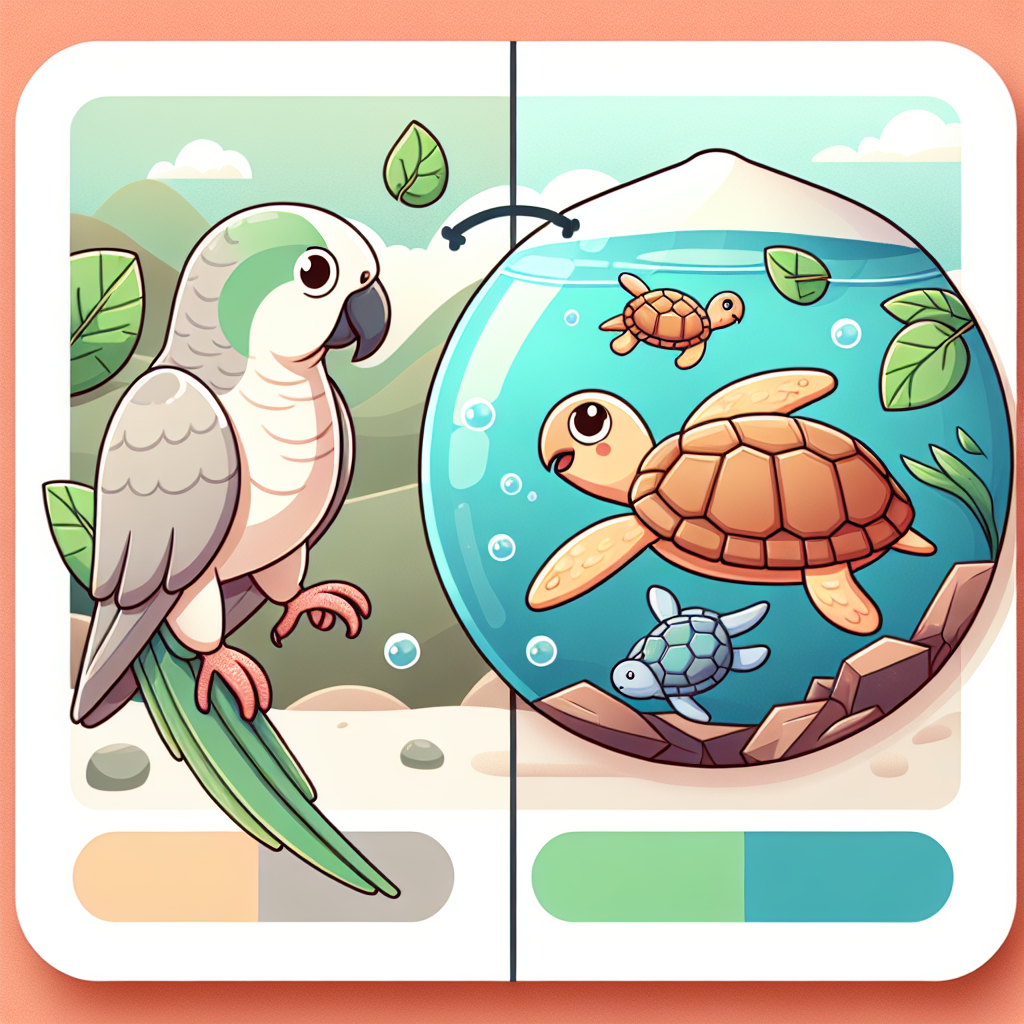
From Monk Parakeets to Tumbling Turtles: Understanding Social Dynamics and Environmental Challenges in Pet Ecosystems
In the ever-evolving world of pet health and behavior, recent findings shed light on intricate social interactions and pressing environmental challenges that impact animal life. From monk parakeets forming friendships akin to humans to sea turtles struggling due to environmental changes, the latest research offers deep insights into the lives of our animal companions.
Beyond Chirps: Parakeet Social Dynamics
Monk parakeets, known for their social nature, are now observed to use a complex strategy for making friends that mirrors human socialization processes. According to a study reported by Science Daily, these birds tentatively approach potential companions to avoid aggression, progressively building deeper bonds through shared grooming and time spent in proximity (Science Daily). This cautious approach to friendship is a delicate dance, indicating that even birds value and carefully nurture their social networks.
The Dance of Friendship
- Parakeets initially engage through simple interactions like shared space.
- As comfort builds, mutual grooming becomes frequent, an indicator of trust.
- The parakeet’s gradual approach avoids confrontations, ensuring stable social circles.
This insight can help pet owners foster better environments for pet birds, encouraging enriched interactions that mimic their natural tendencies.
Record Sargassum Blooms: A Barrier for Sea Turtles
While birds navigate social complexities, sea turtles face significant survival challenges. Record piles of sargassum seaweed are becoming obstacles for these hatchlings. Recent findings highlight that this seaweed not only slows down their journey to the ocean but also increases their vulnerability to predators, (Science Daily). The sargassum acts as a physical barrier, causing critical delays.
The Impact of Sargassum
- Sargassum piles are increasingly found on beaches globally due to environmental changes.
- These piles prevent hatchlings from reaching the ocean swiftly, exposing them to prolonged risks.
- Efforts are needed to manage these blooms and support hatchling survival rates.
Understanding environmental shifts and their impacts on marine life is crucial for conservation efforts. Addressing these seaweed blooms could involve collaborative global strategies to safeguard sea turtle populations.
The Role of Community Actions and Scientific Research
Active engagement from local authorities, environmentalists, and the scientific community is pivotal in addressing these challenges. For parakeets, enhancing urban environments that allow natural behaviors can support more robust bird communities. Meanwhile, in marine ecosystems, coordinated efforts to tackle sargassum blooms are essential.
As we deepen our understanding of such challenges and adapt to changing ecosystems, the synergy of scientific insight and community intervention continues to hold promise for sustainable solutions in pet and wildlife health. The journey from awareness to action involves continuous observation, community participation, and innovative conservation practices.
For those keen on engaging in deeper discussion and awareness, following updates from leading science platforms and local wildlife organizations is recommended.