The Hidden Adaptations of Walking Sharks: Insights into Energy Efficiency in Marine Life
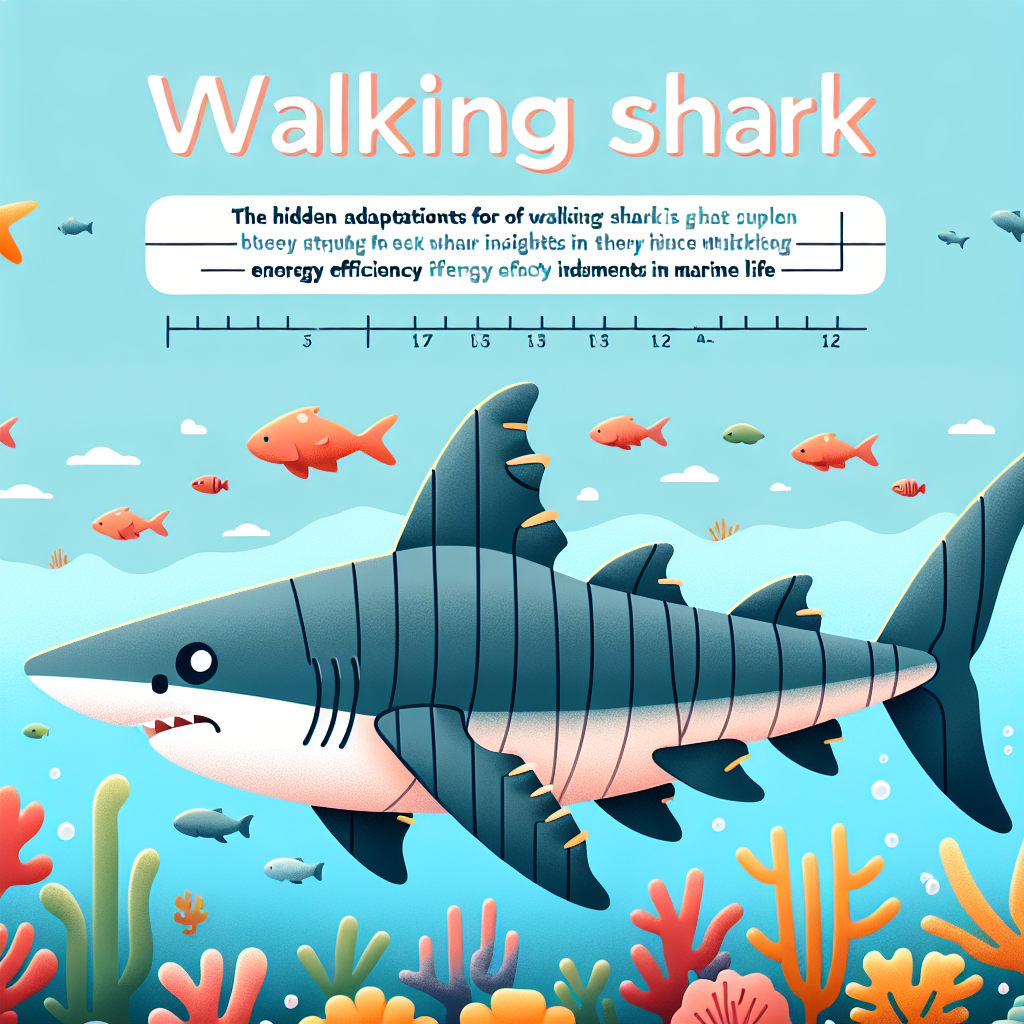
The mysterious realm of the ocean is home to some of the Earth’s most captivating creatures, and among them, the epaulette sharks, colloquially known as ‘walking sharks’, stand out due to their unique adaptations.
These small sharks, primarily found around coral reefs in Australia and New Guinea, reveal evolutionary marvels that can reshape our understanding of marine biology and perhaps even inspire innovations in fields such as robotics and energy conservation.
Walking Sharks: Nature’s Stealthy Navigators
Unlike the streamlined swimmers we often envision, epaulette sharks possess the remarkable ability to ‘walk’ across the seabed, especially during low tides when mobility becomes vital for survival. According to recent research (Science Daily), these sharks exhibit an extraordinary reproductive trait: they can reproduce without a significant rise in energy expenditure, surprisingly keeping metabolic, hormonal, and blood levels stable throughout pregnancy and egg-laying.
The Efficiency Paradox
This discovery challenges prevailing assumptions about the energy costs of reproduction in marine creatures. Traditionally, reproduction has been considered energetically expensive, requiring increased caloric intake and metabolic rate adjustments. Yet, walking sharks break this rule. Researchers tracked physiological changes throughout reproductive cycles and found remarkable stability, suggesting an evolutionary adaptation that optimizes their energy usage. Such efficiency could provide insights into the development of energy-saving technologies.
These findings not only intrigue biologists but also inspire a broader audience by showcasing the intricate interplay between survival strategies and environmental constraints.
Broader Implications for Marine Research and Beyond
- Energy Optimization: Walking sharks hint at sophisticated biological energy management strategies. Understanding these could lead to technological advancements in fields such as sustainable energy systems, robotics, and even artificial intelligence, where energy efficiency is paramount.
- Conservation Insights: As climate change affects marine habitats, understanding the resilience mechanisms of species such as walking sharks can inform conservation strategies to protect delicate reef ecosystems.
- Applications in Robotics: The locomotion of these sharks may inspire biomimetic designs, leading to robots capable of efficiently navigating complex, varied terrain.
The Narrative of Adaptation and Survival
The story of walking sharks underscores that success in the natural world is not merely about sheer strength or speed but also about intelligent resource management and adaptation. It provides a narrative of how evolution carefully selects traits that ensure survival in changing environments.
‘Epaulette sharks teach us that thriving in the wild often depends on versatility and efficiency, offering lessons that transcend wildlife and inform our own technological and conservation efforts.’
Given the current pace of environmental change, insights into such unique adaptations underscore the need for integrated conservation practices that foster coexistence between human activities and marine ecosystems. As these sharks continue to navigate their dynamic habitats with poise, they invite us to reflect on how we, too, can optimize our interactions with the planet and each other for a truly sustainable future.