The $150,000 Plan to Solve America’s Rural Veterinarian Shortage
If you live in rural America and own animals—whether they’re livestock, horses, or even pets—you’ve probably noticed a troubling trend: veterinarians are getting harder to find.
Across the country, rural communities are facing a growing veterinary workforce shortage, especially for vets who treat large animals and livestock. Now, one state is trying something bold to fix it.
Why Rural Veterinarians Are Disappearing
Veterinary medicine has changed dramatically in recent decades.
Today, many graduates prefer careers in urban companion-animal clinics, where they treat dogs and cats rather than cattle or pigs. Those jobs often come with more predictable hours and fewer emergency calls in the middle of the night.
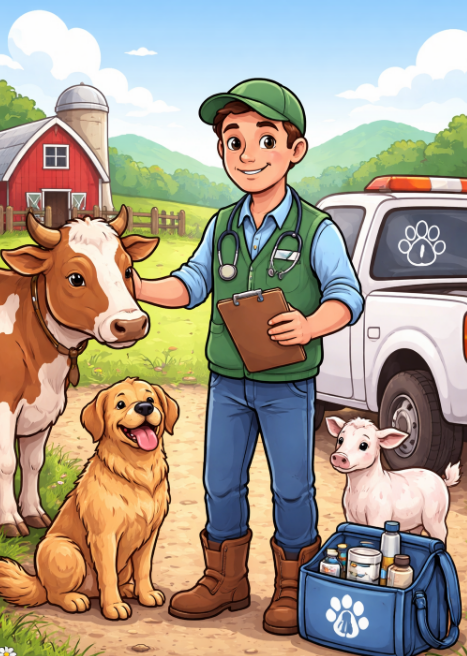
But livestock producers still rely heavily on veterinarians. Rural vets play a critical role in:
- Maintaining herd health
- Preventing disease outbreaks
- Supporting food safety
- Responding to agricultural emergencies
In Nebraska—one of the largest livestock-producing states—the shortage has become serious enough that the state government decided to intervene.
A $150,000 Incentive
The Nebraska Production Animal Rural Veterinarian Grant Program offers financial incentives to new veterinarians willing to build their careers in rural communities.
Here’s how it works:
- Up to 13 veterinarians will receive grants.
- Each grant is worth $150,000.
- Total funding for the program is $1.95 million.
But there’s a catch.
Recipients must commit to eight years of practice in rural Nebraska and work in clinics where at least 80% of their time is devoted to production animals like cattle, pigs, and other livestock. In other words, the state is investing in vets who will support its agricultural backbone.
Who Can Apply?
The program is aimed at recent veterinary graduates or new practitioners.
To qualify, applicants must:
- Have earned a Doctor of Veterinary Medicine (DVM) degree recently
- Be licensed to practice in Nebraska
- Accept a job at a rural veterinary practice or start one themselves
- Work primarily with livestock
- Live in Nebraska and stay for at least eight years
The grants are designed not just to recruit veterinarians, but to help them put down roots in rural communities.
Why This Matters for Animal Health
While the program focuses on production animals, the benefits extend beyond agriculture.
Rural veterinarians often serve entire communities. In many towns, the same clinic treats:
- Livestock
- Horses
- Dogs and cats
- Small farm animals
When rural vets disappear, communities lose more than livestock care—they lose access to essential animal healthcare overall.
Veterinary shortages can also increase the risk of:
- Animal disease outbreaks
- Delayed diagnoses
- Reduced farm productivity
- Food supply disruptions
Programs like this aim to stabilize those risks by strengthening the veterinary workforce where it’s needed most.
Could This Model Spread?
Nebraska isn’t the only place struggling to recruit rural veterinarians. Similar shortages exist across the Midwest, Great Plains, and parts of the Southeast.
If Nebraska’s program succeeds, other states may follow with financial incentives, loan forgiveness, or rural practice grants to attract veterinarians.
For young vets carrying heavy student loan debt, a $150,000 incentive could be the difference between choosing a rural career—or not.
And for farmers, ranchers, and rural pet owners, it could mean something even more important:
Reliable veterinary care close to home.