What Every Dog Owner Should Know About Kennel Cough Spread
When a Daycare Cough Becomes Everyone’s Problem
It often starts with one dog.
A happy, social, tail-wagging dog goes to daycare, boarding, grooming, training class, or the dog park. A few days later, that dog develops a dry, hacking cough. Then another dog starts coughing. Then a facility sends an email: “We have had reports of kennel cough.”
For dog owners, that message can feel alarming. For daycare and boarding facilities, it can feel like a reputational emergency. But kennel cough is not usually a sign that anyone did something wrong. It is a sign that respiratory germs spread easily when dogs gather together.
Veterinarians often refer to kennel cough as part of canine infectious respiratory disease complex, or CIRDC. That name matters because “kennel cough” is not usually caused by just one germ. It can involve bacteria, viruses, or several pathogens acting together. Bordetella bronchiseptica is one of the best-known causes, but canine parainfluenza virus, canine adenovirus type 2, Mycoplasma species, canine respiratory coronavirus, and other organisms may also play a role.
Why Kennel Cough Spreads So Easily
Kennel cough spreads the way many respiratory infections spread: through close contact, shared air, respiratory droplets, contaminated surfaces, and objects that dogs touch with their noses and mouths. Cornell’s canine health guidance notes that respiratory diseases such as kennel cough can spread through direct dog-to-dog contact, airborne transmission, and contact with contaminated objects.
That is why places like dog daycares, boarding kennels, shelters, grooming salons, training classes, and dog parks can become hotspots. Dogs are excited. They bark. They sniff. They lick. They share water bowls, toys, gates, floors, bedding, and human hands.
What Kennel Cough Looks Like
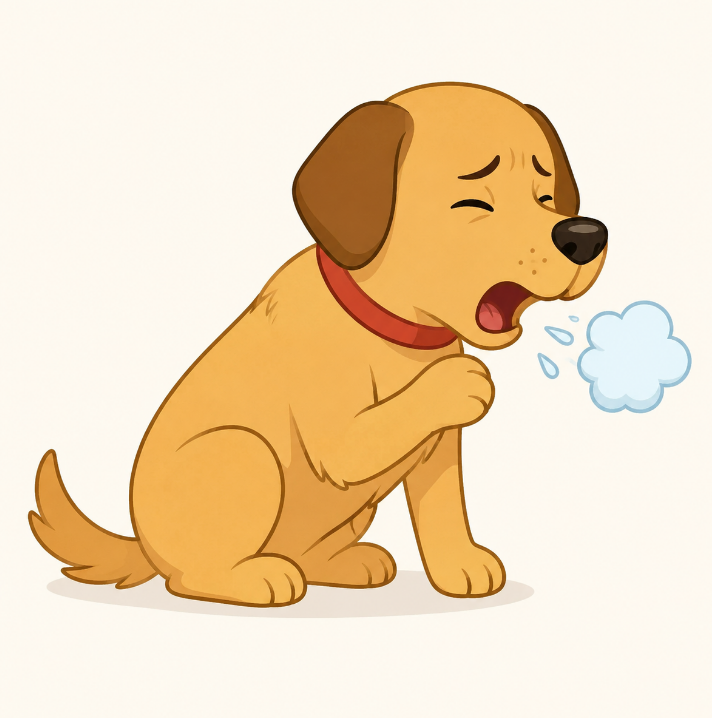
The classic sign is a dry, hacking cough that can sound like honking, gagging, or retching. Some dogs seem otherwise normal. They eat, play, and act like themselves, but they keep coughing.
Other dogs may have sneezing, runny eyes, nasal discharge, tiredness, or reduced appetite. The uncomplicated form as a dry hacking cough with gagging or retching, whereas more complicated cases may involve a wet cough, fever, loss of appetite, vomiting, diarrhea, and more serious illness, especially in puppies or immunocompromised dogs.
Most mild cases improve with rest and time, but dog owners should contact a veterinarian if symptoms worsen, persist for more than several days, include fever or lethargy, or occur in a puppy, senior dog, pregnant dog, or a dog with other health problems. American Humane notes that many mild cases last about 7 to 10 days, but prolonged or worsening symptoms should be checked by a veterinarian.
The Sneaky Part: Dogs Can Spread Germs Before You Know They Are Sick
One reason kennel cough is so frustrating is that a dog may be contagious before anyone realizes there is a problem. There can be an incubation period of 1 to 8 days, and infected dogs may shed Bordetella bronchiseptica for 2 to 3 months after clinical recovery.
That does not mean every recovering dog is equally risky for months, nor does it mean every cough is Bordetella. But it does explain why outbreaks can be hard to stop. By the time coughing begins, a dog may already have exposed others.
This is also why a good facility response is not just, “We clean when something happens.” It is, “We reduce risk every day.”
Vaccines Help, But They Are Not a Bubble
Many dog owners think the Bordetella vaccine is the “kennel cough vaccine.” That is partly true, but it is not the whole story.
Bordetella vaccination can reduce the risk of illness, reduce severity, and reduce shedding, especially for dogs who board, attend daycare, visit groomers, go to dog parks, or spend time around other dogs. Cornell describes Bordetella vaccination as a non-core vaccine, meaning it is not required for every dog, but it is highly recommended for dogs at risk due to their lifestyle.
Still, kennel cough can involve multiple pathogens. A vaccinated dog can still cough if exposed to another respiratory organism or if protection is incomplete. The AVMA’s guidance emphasizes keeping vaccines current as one of the most effective preventive measures, while also recognizing CIRDC as a complex respiratory syndrome.
So the practical takeaway is this: vaccination matters, but it works best as part of a larger prevention system.
What Dog Owners Should Do During a Kennel Cough Outbreak
If kennel cough is spreading in your dog’s daycare, boarding facility, or local dog community, do not panic. But do take it seriously.
Keep your dog home if they are coughing, sneezing, unusually tired, or showing nasal discharge. Avoid daycare, boarding, grooming, group classes, and dog parks until your veterinarian says it is safe to return. If your dog was recently exposed but is not sick, ask your veterinarian what to watch for and whether your dog’s vaccines are up to date.
You should also call your vet before walking into the clinic with a coughing dog. Many clinics will want to reduce exposure to other dogs, especially puppies, senior dogs, and medically fragile pets.
The hardest part is social: nobody wants to be the person who cancels daycare, training, or a boarding reservation. But respiratory outbreaks depend on contact. Reducing contact is one of the fastest ways to slow the spread.
What Daycares, Kennels, and Groomers Should Do Differently
For pet facilities, kennel cough prevention is not just about cleaning. It is about systems.
Facilities need clear vaccination policies, daily symptom screening, isolation procedures for coughing dogs, communication plans for clients, staff training, air flow awareness, and strong environmental hygiene. Shared surfaces, bowls, crates, leashes, gates, toys, floors, and high-touch human areas all matter.
This is where infection control becomes a business issue as much as a health issue. Pet parents want to know that a facility is not only fun and loving, but also serious about prevention. A facility that can explain its cleaning, disinfection, and outbreak communication practices builds trust before a problem arises.
For dog daycares, kennels, groomers, shelters, and veterinary-adjacent settings, ATP can fit into the daily rhythm of risk reduction: cleaning high-touch areas, disinfecting shared spaces, responding quickly after suspected exposure, and showing clients that infection control is taken seriously.
The Bottom Line for Pet Owners and Facilities
Kennel cough spreads because dogs are social. It moves through the places dogs love most: daycare rooms, boarding facilities, grooming salons, training classes, parks, shelters, and veterinary waiting areas.
For owners, the best defense is awareness, vaccination conversations with your vet, and keeping sick dogs home. For facilities, the best defense is a layered prevention plan that includes screening, communication, ventilation awareness, isolation protocols, and consistent disinfection.
Kennel cough may be common, but that does not mean it should be casual. Every cough is a reminder that pet health is shared health. When owners and facilities work together, dogs can keep enjoying the social lives they love with less risk for everyone.